Healthcare Costs Are Squeezing Small Businesses and Their Employees. Here’s a Smarter Way to Respond.
Direct Primary Care and what it means for Baton Rouge employers
If you run a small business, you know the feeling. The renewal letter arrives, the premium is higher again, and you’re left choosing between absorbing the increase, shifting more cost to your team, or trimming benefits. This year, the data says you’re not imagining it.

The numbers behind the squeeze
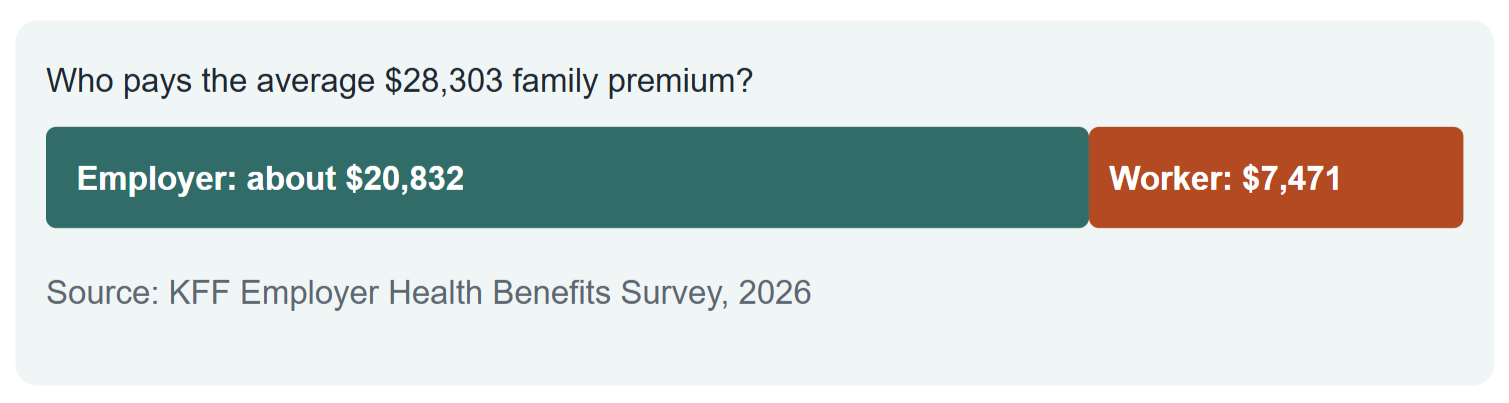
KFF’s 2026 Employer Health Benefits Survey, released this week, found the average annual premium for employer-sponsored family coverage has reached $28,303, up 5% in a year. Single coverage averages $9,804. For smaller firms, the average family premium has climbed from $21,598 in 2021 to $27,288 today. Premiums grew 5% while inflation ran 2.7%, and the outlook isn’t calming: forecasts point to 2027 increases approaching double digits.
Employees are feeling it too
The cost isn’t only landing on employers. As Baton Rouge Business Report recently highlighted, workers now contribute an average of $7,471 a year toward family coverage, up 9% in a single year, and the average deductible is approaching $2,000. At businesses with fewer than 200 workers, more than a third of employees face deductibles of at least $3,000. Employers point to hospital care, costly cancer treatments, and GLP-1 coverage as the drivers.
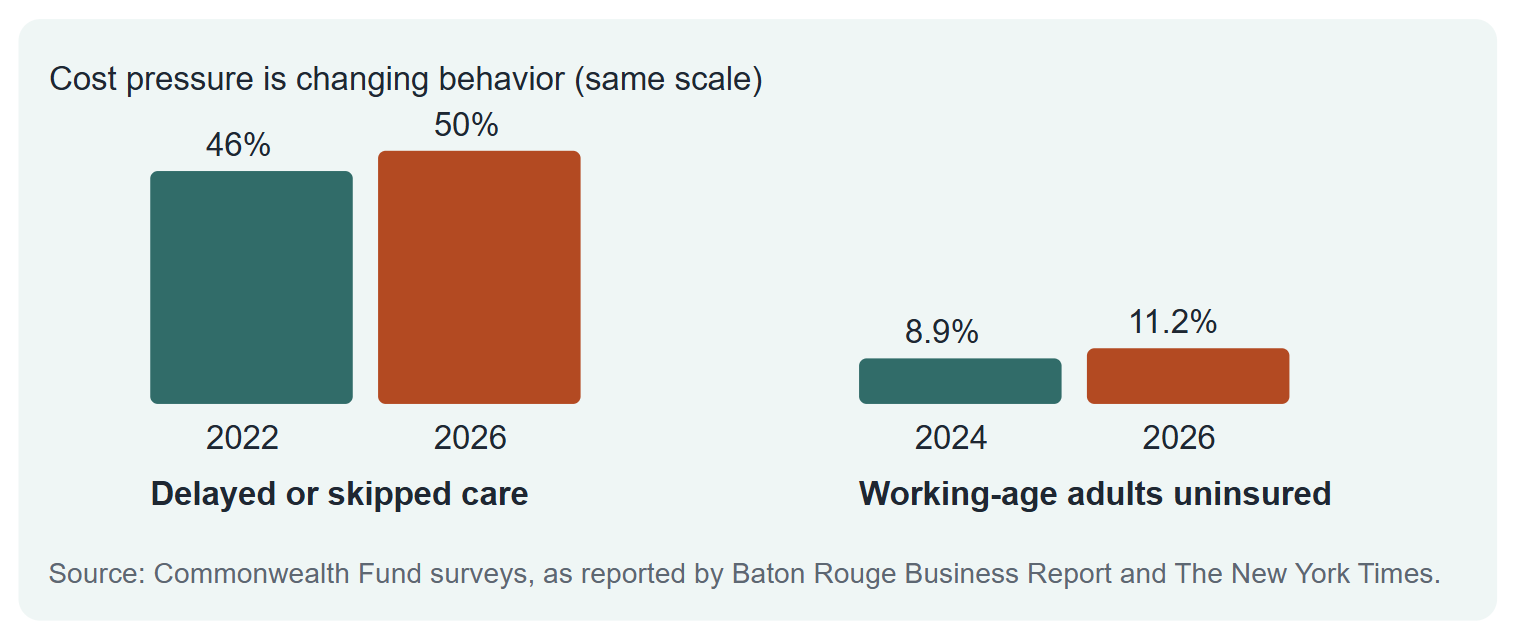
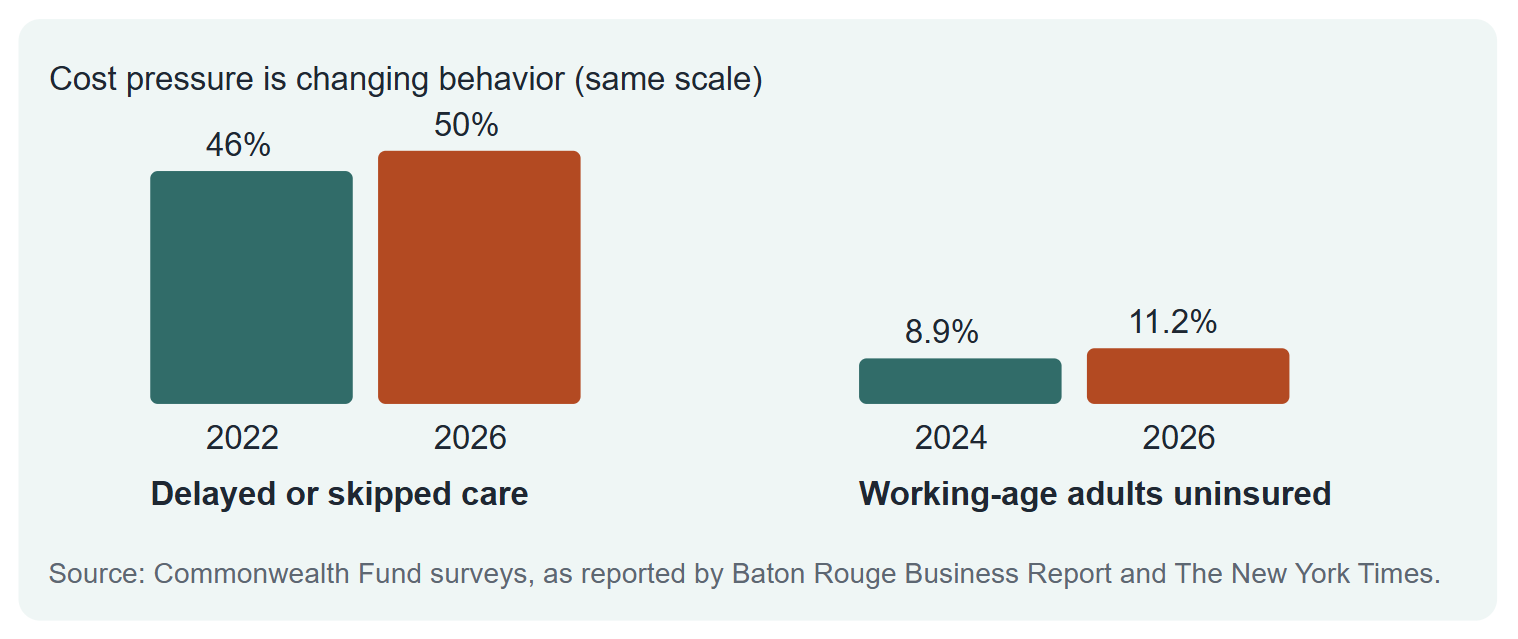
The result is people avoiding the doctor. A Commonwealth Fund survey found that 50% of working-age adults delayed or skipped care because of cost, up from 46% in 2022, while the share of working-age adults without insurance rose from 8.9% to 11.2%, roughly 30 million uninsured Americans.
Louisiana is feeling it acutely. Baton Rouge Business Report has reported that Louisiana employees paid 37% of the premium in 2024, versus 30% nationally, and that a 140-employee Baton Rouge company saw a 13% premium jump in 2026. This week, East Baton Rouge city-parish employees learned they’ll pay 15% to 25% more for coverage in 2027, with higher deductibles.
Put the two together and you get a familiar pattern: employees delay routine care, small problems become big ones, and everyone pays more later.
Enter Direct Primary Care
Direct Primary Care (DPC) flips the model. Instead of billing insurance for every visit, patients pay a flat monthly membership directly to their doctor. Without the billing machinery, the doctor can spend more time with each patient. Many DPC practices offer little or no per-visit cost, easy online scheduling, direct communication with the physician, and near-wholesale pricing on common medications and lab work.
You’ll also hear the term concierge medicine. The two are close cousins, but concierge practices often charge a membership fee and still bill insurance. DPC is simpler: one transparent fee, no insurance billing, and a relationship built around the patient.
Meet Sasser Direct Primary Care
Right here in Baton Rouge, Sasser Direct Primary Care brings that model to local individuals, families, and employers. Dr. Charles Sasser is an internal medicine physician, an LSU graduate who served in the military for 16 years before building his medical career, and who moved to the DPC model in 2020.
- Affordable membership: concierge-level care starting at $100 per month.
- Direct access to your physician: personal attention instead of a rushed, insurance-driven visit.
- In-house medications: many common prescriptions can be filled in the office, saving a trip to the pharmacy.
- Convenient hours: Monday through Thursday 9 to 5, and Friday 9 to 3, at 7650 Old Hammond Highway.
- Ages 12 to 65: a fit for most working adults and many teens in their families.
An honest note: DPC complements insurance
DPC isn’t a replacement for health insurance. It covers everyday primary care well, but you’ll still want coverage for hospital stays, emergencies, and specialists. That’s why it pairs nicely with a high-deductible or catastrophic plan, which typically carries a lower premium. Federal rules changed in 2026 to allow DPC memberships alongside HSA-eligible plans within set fee limits, so ask your benefits advisor how to structure it.
How small employers can use it
- Offer DPC membership as a stand-alone benefit for employees who are uninsured or underinsured.
- Pair it with a leaner insurance plan to manage premium growth.
- Use it as a recruiting and retention perk that employees actually notice and use.
- Healthy, well-cared-for employees are more engaged, and a doctor who knows your name is hard to beat.
Ready to explore it for your team?
Visit: sasser-dpc.com or call 225-432-1733 to talk with Sasser Direct Primary Care about membership options for your business.
*Cost figures from KFF’s 2026 Employer Health Benefits Survey and Commonwealth Fund findings, as reported by Baton Rouge Business Report and The New York Times; employer share is calculated as total premium minus worker contribution. Louisiana figures reported by Baton Rouge Business Report. Sasser DPC details from the practice’s published information. This article is informational and not tax or insurance advice.